Every client came through the founder.
Everything the market could reach
without him described a smaller,
narrower firm.
Nexus Source
Sustainable Supply Partners was a supply chain consultancy run by partners out of Deloitte and McKinsey, working for a global cruise line, a fuel and convenience retailer, and a global airlines supplier — enterprise and private-equity-backed work, at seven figures over a multi-year term.
The firm was named for a specialty it had outgrown. Its website argued that specialty on every screen. Nine months later it had a different name, a different category, and a market-facing system built for the buyer it was actually selling to.
The Symptom
“I want the website to speak to how we’ve grown as a business. And I just feel like the website doesn’t do that now. It doesn’t reflect the professionalism and the sophistication that we have.”
He had built the site himself and said so. He raised the firm’s name before we did — too long, and his clients did not use it. He described the firm twice in that hour as small and scrappy.
He was right about the site and right about the name. What neither told him was what the site was supposed to be describing, and that is where the engagement started.
01Pattern
We interviewed the founder and one of the firm’s own clients, and read the published materials against both.
Three accounts of one company, and they did not converge. The founder led with big-firm quality at a fraction of the cost. The client never mentioned it — what he described paying for was judgment on his side of the table and a willingness to research territory the firm did not already know. The website argued something else again: its Value Proposition section opened on sustainability plus cost savings, and explained that the sustainability work is self-funding because cost savings are embedded in it.
Sustainability was the subject of the firm’s own value proposition. It was the first word of the firm’s name. This was what the founder spoke about from the beginning and this is what he was selling to his clients. And it had played no part in the client’s decision to buy.
That is a pattern rather than a complaint: the same discrepancy appearing in the name, in the materials, in the founder’s pitch, and in what a paying client believed he had bought.
It carried a cost that was already visible. Growth had stopped at the edge of the founder’s network. His own assessment, volunteered: the prospects who went deep on the website were not the ones converting. He was closing against his own materials, and only in rooms he was personally in.
'%3e%3cg%20id='Union'%3e%3cmask%20id='path-1-inside-1_0_4'%20fill='white'%3e%3cpath%20d='M7%20111.887L6.99999%20218L-15%20218L-15%20-1.18021e-06L7%20-2.18557e-07L7%20106.113L12%20109L7%20111.887Z'/%3e%3c/mask%3e%3cpath%20d='M7%20111.887L6.5%20111.021L6%20111.309L6%20111.887L7%20111.887ZM6.99999%20218L6.99999%20219L7.99999%20219L7.99999%20218L6.99999%20218ZM-15%20218L-16%20218L-16%20219L-15%20219L-15%20218ZM-15%20-1.18021e-06L-15%20-1L-16%20-1L-16%20-1.22392e-06L-15%20-1.18021e-06ZM7%20-2.18557e-07L8%20-1.74846e-07L8%20-1L7%20-1L7%20-2.18557e-07ZM7%20106.113L6%20106.113L6%20106.691L6.5%20106.979L7%20106.113ZM12%20109L12.5%20109.866L14%20109L12.5%20108.134L12%20109ZM7%20111.887L6%20111.887L5.99999%20218L6.99999%20218L7.99999%20218L8%20111.887L7%20111.887ZM6.99999%20218L6.99999%20217L-15%20217L-15%20218L-15%20219L6.99999%20219L6.99999%20218ZM-15%20218L-14%20218L-14%20-1.1365e-06L-15%20-1.18021e-06L-16%20-1.22392e-06L-16%20218L-15%20218ZM-15%20-1.18021e-06L-15%200.999999L7%201L7%20-2.18557e-07L7%20-1L-15%20-1L-15%20-1.18021e-06ZM7%20-2.18557e-07L6%20-2.62268e-07L6%20106.113L7%20106.113L8%20106.113L8%20-1.74846e-07L7%20-2.18557e-07ZM7%20106.113L6.5%20106.979L11.5%20109.866L12%20109L12.5%20108.134L7.49999%20105.247L7%20106.113ZM12%20109L11.5%20108.134L6.5%20111.021L7%20111.887L7.49999%20112.753L12.5%20109.866L12%20109Z'%20fill='%23C9CDD1'%20mask='url(%23path-1-inside-1_0_4)'/%3e%3c/g%3e%3c/g%3e%3cdefs%3e%3cclipPath%20id='clip0_0_4'%3e%3crect%20width='12'%20height='218'%20fill='white'/%3e%3c/clipPath%3e%3c/defs%3e%3c/svg%3e)
THE CONDITION
Interview subjects were told before recording: nothing attributed, nothing shared with the firm or its founder, findings presented in general form. The interviewer is a third party with no prior relationship and no expectation of future contact — which removes the terms an existing relationship silently sets on what gets said.
THE FINDING AT THIS STAGE
The firm was selling one business and describing another, and the description was doing the work whenever the founder was not there.
That is where the Diagnostic ends — a pattern established, a proposition that did not survive contact with evidence, and a direction for the investigation. What it does not yet establish is what the market had put in place of the firm, where that was manufactured, and what it cost at which point in the sale.
02Misread
Six interviews in total: the firm’s three partners and three of its clients, each at a company the firm had served across multiple engagements. Plus competitor analysis, and sessions with the founder running throughout.
Asked what differentiates the firm, the three partners named three different things. The delivery partner discounted the big-firm pedigree the founder leads with, and — asked why opportunities failed to convert — attributed it to the firm’s inability to explain its approach and its value clearly.
Asked the same question, the three clients converged, in language none of them shared with the firm:
“an intelligent friend rather than a contractor or a supplier — an intelligent friend who you pay.”
“a lot more of an inviting, collaborative effort versus stern, waving the finger that you typically see in these procurement functions.”
None used the firm’s name. One supplied the abbreviation mid-sentence — “Oh, my God, there’s such a long name.” Two volunteered, unasked, that sustainability had played no part in hiring.
No private-equity buyer could be reached, and that profile rests on the founder’s account rather than on interviews.
The materials were read for a second distance: not between what the firm is and what it says, but between what it says and what it shows.
Below the hero, a wall of colored thread spools sat above the words Strategic Sourcing and Product Design. The picture arrives whole and the text gets read inside it — a reader has an environmental product design agency before finishing a sentence. Beneath that, a green panel with four paragraphs on the certification. Beneath that, a research library on regulation, single-use plastics, and Scope 3 decarbonization.
Usually the writing has moved and the pictures have not, and the buyer resolves the contradiction in favor of the picture. Here there was no contradiction. Every element, verbal and visual, argued the same firm — competently, consistently, and wrongly.
THE FINDING
A firm delivering enterprise supply chain work at seven figures, priced and read as a niche environmental specialist — by its own name, its own materials, and its own account of itself.

The origin was growth. The sustainability frame was a deliberate early niche, chosen and earned. The client base then moved upmarket into premium and private-equity-backed work, and the practice widened to hold efficiency, quality, reliability, and sustainability at once — which is what those buyers pay for. The description stayed where it was written.
The correction had to run in both places at once: the account the founder ran on, and every public-facing material the market could reach without him.
03Rebuild
THE POSITION
The firm did four things simultaneously and had no term for the four. We built the sessions to force the list off the firm and onto the client — not capabilities a vendor holds, but constraints a buyer is under. Optimize one alone in a premium business and you break the business: strip cost out of a cruise line’s supply chain and the thing the passenger paid for goes with it.
Positioning first ran on growth. The founder tested it against a live client and it failed: a cruise line buying no more ships is not growing, and is buying efficiency. He reached for resilience in its place, and it held — it covers a firm expanding and a firm holding its size, and both are navigating complexity.
Resilience became the category. Efficiency, quality, reliability, and sustainability became the four pillars beneath it. Every claim in the positioning was tested against what the evidence would carry, and the founder narrowed one himself: an average-savings figure changed from savings realized to savings identified, because the firm does not always know what a client implements after it leaves.
THE NAME
The founder’s own instincts produced two candidates in three days. We killed both with evidence he had not gone looking for — a trademark class crowded with six near-identical firms, and a competitor already holding the second one’s domain.
The argument that took the weeks was ownable against generic. He wanted a name a buyer reads on sight and writes down without being spelled to. We wanted one the firm could own, register, and sell with. Neither position was wrong, and neither alone produces a usable name.
Nexus Source is where those two meet. Source carries the literal work and the source of expertise at once. Nexus is the point where the four pillars converge — which is the positioning, stated in the name.
The founder’s summary, on the call that settled it:
“you did challenge my thinking, and I think that’s good. I probably would have done something more generic and forgetful if I hadn’t been challenged to think in a slightly different way.”
THE MARK

The old mark was a generic recycling icon — the symbol shared by every company that signals environmental intent.

New logo
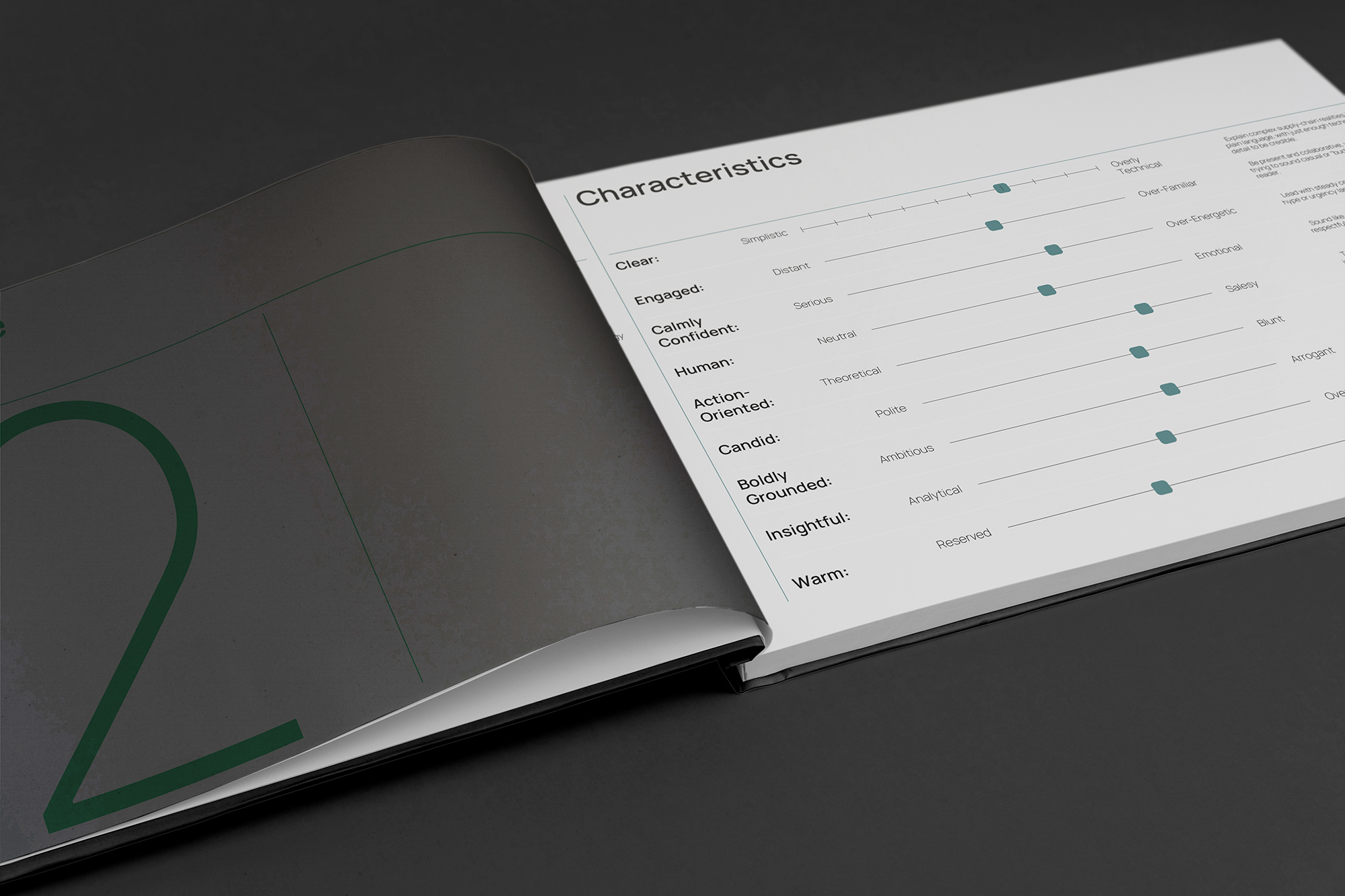
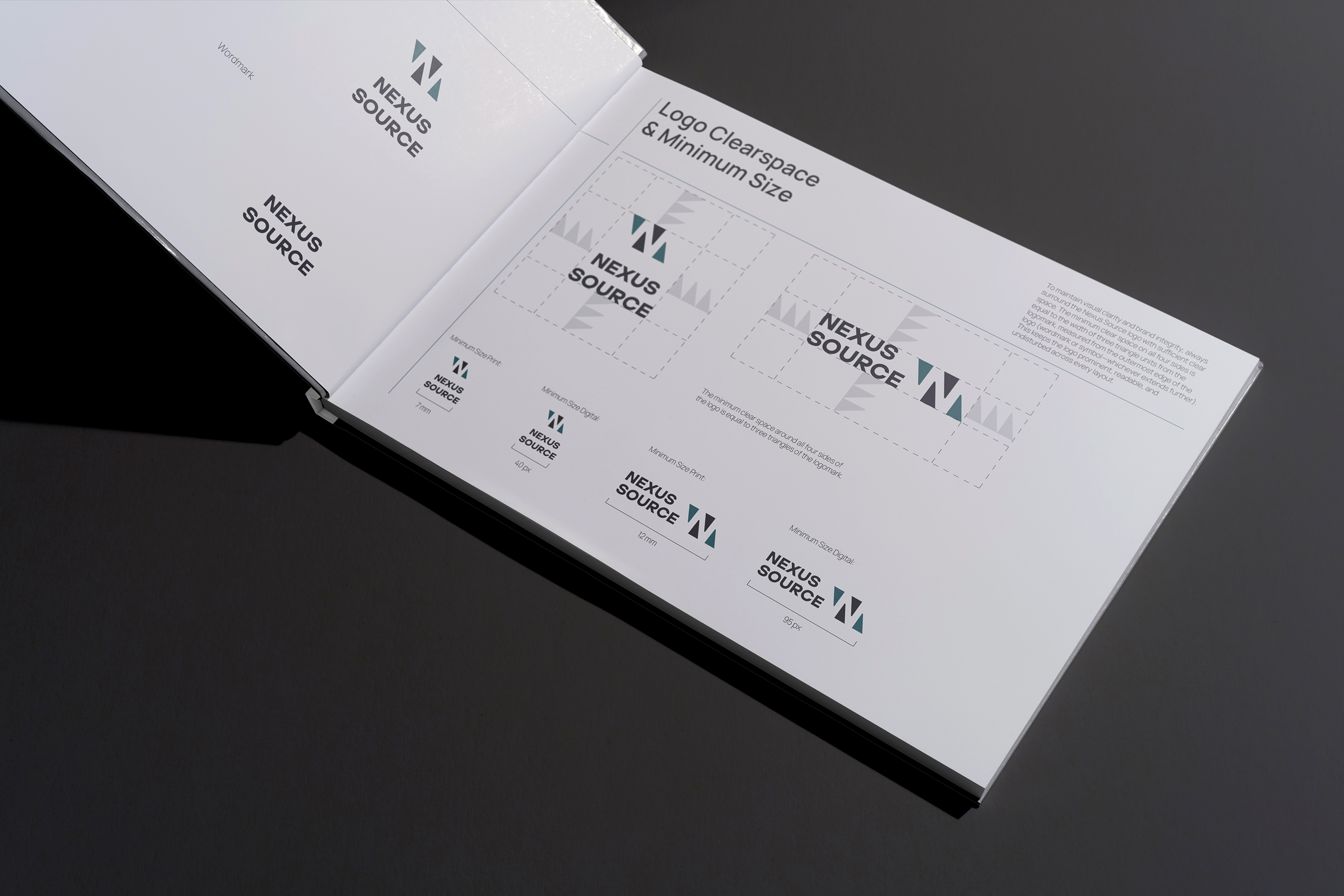
Four triangles converging; a capital N in the space between them.
The brief was narrow: operational, unornamented, and legible as a description of the company before a line of text is read. Four triangles, because there are four pillars. Triangles, because the triangle is the form that does not deform under load — resilience made structurally rather than illustrated with a photograph of a port. The points face inward and read as arriving. Depending on where the eye settles, the mark is four shapes or one letter, occupying the same outline.
THE SITE
The order came first, then the copy, then the design — with copy and design running together rather than in sequence.
The common failure is a site designed with placeholder text and a copywriter hired afterward to fill it. The layout then has no argument underneath it, and the argument has to fit a shape chosen before anyone knew what it would say. It is an engine designed without reference to the gearbox.
Structure was built as the buyer’s progression: what he has to accept, in the order he has to accept it, before price is a reasonable subject. Then copy for each page, which changed the structure where the argument needed different room. Then design against finished copy.
The old site’s structure was about the firm — a Value Proposition section describing itself, a certification panel, a research library. The new one is about the buyer: the situation as it is against what it could be — volatile, disconnected, opaque, against predictable, integrated, visible — then the model, then the capabilities as the model applied.
Almost no photography. The hero image is held down to a surface so the sentence on top of it is the only thing making a claim. No icons, no illustration, no decoration. A step in the working sequence lifts faintly under the cursor and nothing else moves.
The restraint is commercial. This buyer is a careful operator with a large budget, or a partner deciding whether a portfolio company can be fixed. He reads visual noise as a signal about who a firm usually sells to, and he reads it before he reads anything.
THE COMPARISON

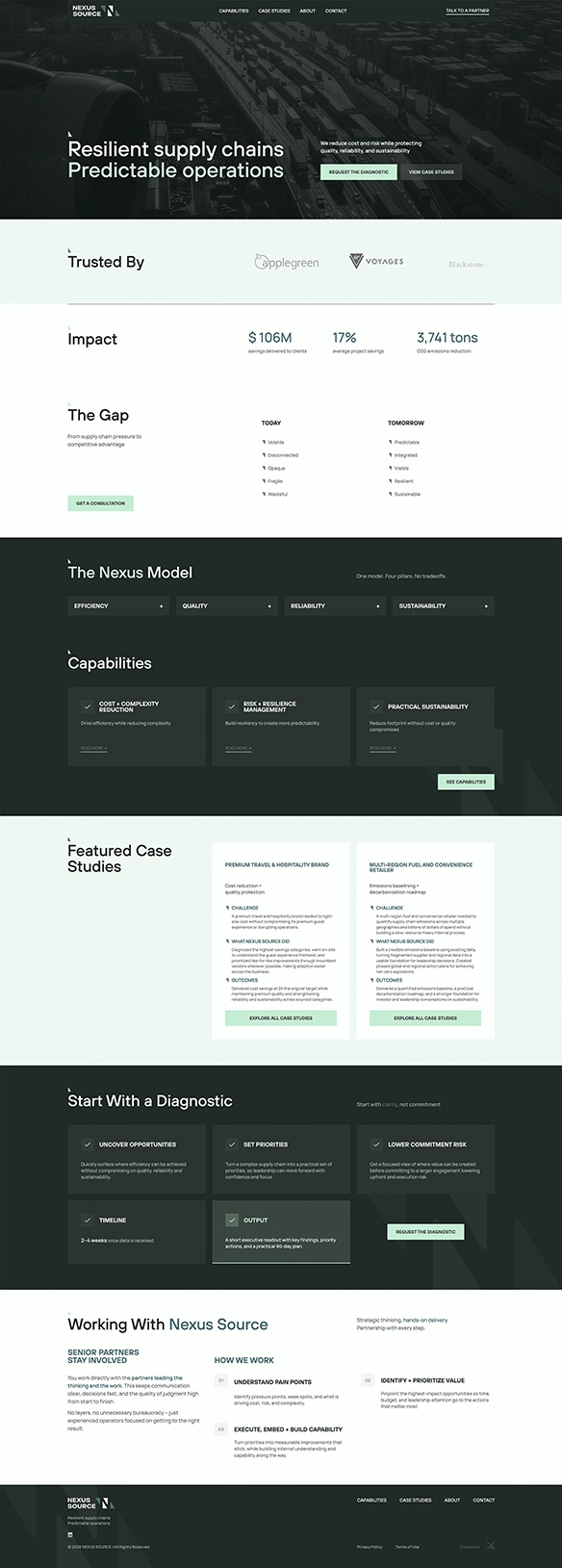
Same firm, nine months apart. What it did had not changed.
04Sale
Within weeks of the positioning locking, the firm signed three contracts: two new engagements through the private-equity channel and a key-client re-sign, together around $3.4 million in combined contract value.
These are Nexus Source’s contracts, signed by Nexus Source. They closed before the new site was live, which is the point rather than a caveat. The document was not what changed the sale. By the time it was written, the founder had been arguing his way through every proposition in it for three months, and was already selling from the account it described.
The strategy work is the part a founder carries into a room. The other part of the rebuild works when he is not in it.
What changed by launch was the whole public-facing system and the account behind it: from a firm named for a specialty it had outgrown, priced by its founder as scrappy, to a boutique positioned to compete against the firms he left — and to be read that way by buyers who had never met him.
At the handoff a month earlier, a partner who joined the firm after the strategy work was asked how the business was going. She could have said fine. She answered with the site, the conversations it was producing, and then this.
“Based upon the current resources that we have, we are sold out in the market, which is a good problem to have.”
Two people at the firm, a month apart, neither asked about capacity, both reporting the same thing. When the engagement began the firm had spare bandwidth and every new client came through the founder.
That is the result. Not the figures, which belong to Nexus Source and to a sequence we can show but not isolate — but a firm whose own materials now make its argument before anyone gets to the room, and a founder who describes the business as what it is.
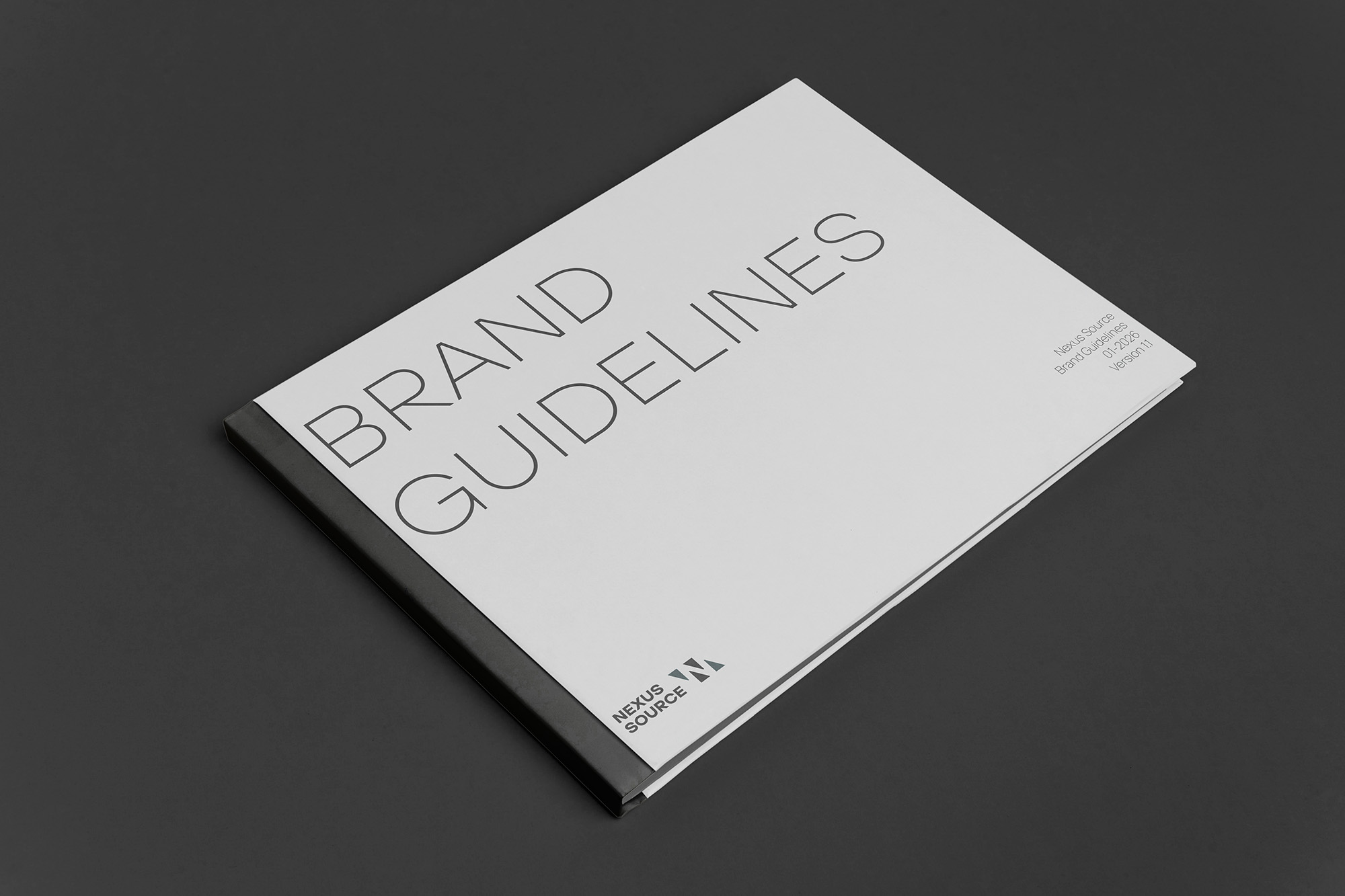
“Rebrand has been a hit and we are busy.”